
Groin strains are among the most frustrating injuries for active individuals and athletes. They can begin as a mild discomfort during training, only to develop into a persistent problem that affects performance, mobility, and confidence in movement. While some groin injuries heal relatively quickly with rest and rehabilitation, others seem to linger for months, repeatedly flaring up whenever activity levels increase. This can make returning to sport or exercise both physically and mentally challenging.
For individuals dealing with long-term groin pain, shockwave therapy has become an increasingly popular treatment option. By targeting damaged tissue and stimulating the body’s natural healing processes, it offers a non-invasive approach to recovery. Understanding how shockwave therapy works and why it may help persistent groin strains can provide valuable insight into managing this difficult injury more effectively.
Understanding Groin Strains
A groin strain typically involves injury to the muscles or tendons located on the inside of the thigh. These structures play a major role in stabilising the pelvis and controlling leg movement.
Groin strains commonly occur during activities that involve sprinting, sudden changes of direction, kicking, jumping, or explosive acceleration. Sports such as football, rugby, hockey, athletics, and martial arts frequently place significant demands on these muscles.
The severity of a groin strain can vary considerably. Some injuries involve minor overstretching, while others include partial tears within the muscle or tendon.
The location and severity of the injury often influence recovery time.
- Involves muscles or tendons of the inner thigh
- Common in explosive sporting activities
- Severity varies between individuals
- Recovery depends on tissue damage
Why Some Groin Strains Become Persistent
Most acute groin strains improve with appropriate management, but some become chronic and difficult to resolve.
Persistent groin pain often develops when the tissue never fully recovers before activity resumes. Repeated irritation prevents the healing process from progressing properly.
Compensation patterns can also contribute. When pain develops, individuals often alter movement mechanics without realising it, creating additional stress elsewhere.
Over time, the injury may evolve from a simple strain into a more complex long-term issue.
- Incomplete healing delays recovery
- Repeated stress aggravates tissue
- Compensation patterns develop
- Chronic symptoms become established
The Impact of Persistent Groin Pain
Long-term groin pain can significantly affect physical performance and everyday life.
Athletes may struggle with sprinting, kicking, changing direction, or generating power. Even simple movements such as climbing stairs, getting in and out of a car, or walking for extended periods can become uncomfortable.
Persistent pain often creates uncertainty and frustration. Many individuals begin avoiding movements they previously performed without hesitation.
This reduction in confidence can become an obstacle to recovery in its own right.
- Limits sporting performance
- Affects daily movement comfort
- Creates fear of reinjury
- Reduces confidence in activity
What Is Shockwave Therapy?
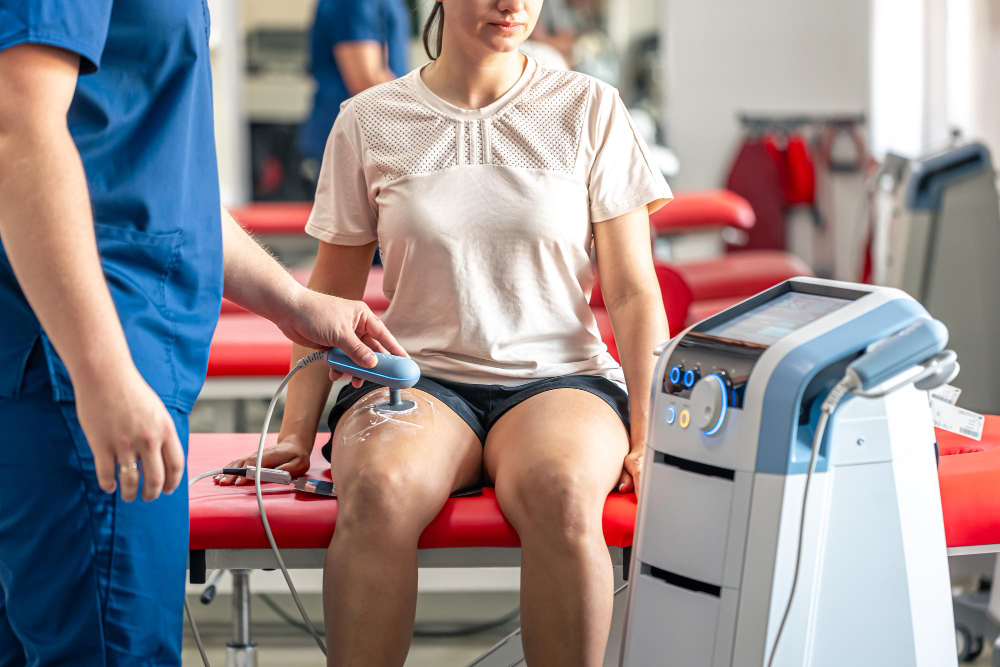
Shockwave therapy is a non-invasive treatment that uses acoustic pressure waves to stimulate healing within damaged tissue.
The treatment is delivered through a handheld device that applies pulses directly to the affected area. These waves travel into the tissue and trigger a series of biological responses.
Unlike treatments focused solely on symptom management, shockwave therapy aims to improve tissue quality and support recovery at the source of the problem.
This makes it particularly valuable for chronic injuries where healing has stalled.
- Uses acoustic pressure waves
- Delivered directly to injured tissue
- Non-invasive treatment approach
- Supports biological healing processes
How Shockwave Therapy Targets Persistent Groin Injuries
Persistent groin strains often involve tissue that has become trapped in a cycle of incomplete healing.
Shockwave therapy helps interrupt this cycle by stimulating activity within the damaged structures. The acoustic energy encourages the body to restart repair processes that may have slowed over time.
This targeted stimulation helps address the underlying tissue dysfunction rather than simply masking symptoms.
As healing improves, pain often begins to reduce and movement becomes easier.
- Stimulates underperforming tissue
- Encourages repair processes
- Targets injury at its source
- Supports functional recovery
Improving Circulation to the Injured Area
Blood flow is essential for tissue healing. Oxygen and nutrients must reach the damaged structures for effective repair to occur.
In chronic injuries, circulation may be limited, reducing the body’s ability to recover fully.
Shockwave therapy stimulates increased blood flow within the treated area, helping create a more favourable environment for healing.
Improved circulation supports both short-term recovery and long-term tissue health.
- Enhances local blood flow
- Improves oxygen delivery
- Supports nutrient transport
- Promotes tissue repair
Encouraging Collagen Production
Collagen is one of the most important building blocks of muscles, tendons, and connective tissues.
When a groin strain occurs, collagen fibres are disrupted and need to be repaired. In persistent injuries, this repair process may be incomplete or poorly organised.
Shockwave therapy stimulates collagen production, encouraging the development of stronger and healthier tissue.
Improved collagen quality contributes directly to long-term recovery.
- Stimulates collagen synthesis
- Supports tissue regeneration
- Improves structural integrity
- Enhances long-term resilience
Reducing Chronic Pain
One of the most frustrating aspects of persistent groin strains is ongoing pain despite prolonged rest or treatment.
Shockwave therapy may help reduce pain by influencing local nerve activity and improving tissue health simultaneously.
As healing progresses, the tissue becomes less irritated and less sensitive to movement or loading.
Pain reduction often allows individuals to participate more effectively in rehabilitation exercises.
- Helps reduce pain sensitivity
- Supports comfortable movement
- Improves exercise tolerance
- Encourages rehabilitation progress
Breaking Down Scar Tissue and Adhesions
Long-term injuries often lead to the formation of scar tissue and adhesions.
While scar tissue is a natural part of healing, excessive build-up can reduce flexibility and interfere with normal movement.
Shockwave therapy helps break down these restrictions, improving tissue mobility and reducing stiffness.
This can be particularly beneficial for athletes who require unrestricted movement for performance.
- Targets restrictive scar tissue
- Improves tissue flexibility
- Reduces stiffness
- Supports natural movement patterns
Supporting Strength and Rehabilitation
Shockwave therapy is most effective when combined with an appropriate rehabilitation programme.
Exercise remains essential for restoring strength, mobility, and load tolerance following a groin injury.
By reducing pain and improving tissue quality, shockwave therapy often makes rehabilitation exercises easier to perform.
This combination allows recovery to progress more effectively.
- Complements strengthening exercises
- Supports progressive loading
- Improves exercise participation
- Enhances rehabilitation outcomes
Restoring Confidence in Movement
Persistent groin pain often creates hesitation during movement. Individuals may unconsciously avoid certain actions because they fear pain or reinjury.
This protective behaviour can limit recovery by reducing normal movement exposure.
As symptoms improve through treatment and rehabilitation, confidence typically begins to return.
Restoring trust in the injured area is a crucial part of long-term recovery.
- Encourages confident movement
- Reduces fear of reinjury
- Supports normal activity patterns
- Improves psychological recovery
Who May Benefit from Shockwave Therapy?
Shockwave therapy may be particularly beneficial for individuals experiencing chronic groin pain that has not responded fully to rest, stretching, or conventional treatment approaches.
Athletes involved in running, football, rugby, hockey, and other high-demand sports often explore shockwave therapy when symptoms persist.
However, suitability depends on the specific diagnosis and underlying cause of the pain.
A thorough assessment is always important before treatment begins.
- Useful for chronic groin issues
- Commonly used by athletes
- Suitable for persistent symptoms
- Requires professional assessment
Why Early Intervention Matters
Many people continue training despite ongoing groin discomfort, hoping the problem will eventually resolve itself.
Unfortunately, delaying treatment often allows tissue dysfunction and compensation patterns to become more established.
Early intervention can reduce recovery time and prevent a minor issue from becoming a chronic problem.
Addressing symptoms sooner generally leads to better outcomes.
- Prevents worsening symptoms
- Reduces long-term complications
- Supports faster recovery
- Improves treatment effectiveness
Long-Term Recovery and Prevention
Recovering from a persistent groin strain involves more than simply reducing pain.
Long-term success depends on restoring strength, flexibility, movement quality, and load tolerance. These factors help reduce the likelihood of recurrence.
Shockwave therapy can support this process by improving tissue quality and helping the body tolerate progressive rehabilitation.
Combined with appropriate training and recovery strategies, it can contribute to lasting improvements.
- Supports complete recovery
- Improves tissue resilience
- Reduces recurrence risk
- Encourages long-term performance
Conclusion
Persistent groin strains can be difficult to manage because they often involve incomplete healing, chronic tissue irritation, and reduced confidence in movement. While rest and rehabilitation remain important, some injuries require additional support to restart the healing process. Shockwave therapy offers a targeted and non-invasive approach that stimulates circulation, encourages collagen production, reduces pain, and improves tissue quality.
When combined with a structured rehabilitation programme, shockwave therapy can help individuals overcome long-standing groin problems and return to activity with greater confidence. For athletes and active individuals struggling with recurring groin pain, it represents a valuable option that addresses the injury at its source rather than simply managing the symptoms.

5 star reviews

Proven results

Holistic healing


REVIEWS
What clients have to say
If you struggle with food noise or feel like food thoughts dominate your day, I would definitely recommend giving hypnotherapy with Ian a try. It’s been a surprisingly empowering experience.
Ian very quickly addressed issues I was having with just a conversation this is due to his extensive knowledge within the industry. This allowed him to get straight to work on each muscle group to relieve my pain and symptoms.
From the beginning of the therapy my sleep improved and gradually over the sessions my symptoms reduced. By the end of my course of therapy I felt much stronger and empowered to deal with daily life.
Everything was easy to understand, and he gave me certain activities to complete, through the day, and prior to going to bed in the evening, and the results are amazing. I am sleeping a lot better, find it easier to fall asleep, but the main thing for me was waking up less through the night.
Hypnotherapy has totally changed my outlook on life and changed me to thinking much more positive. Ian was very professional and his treatment room is a lovely relaxing space. I can’t thank Ian enough for everything.
After a few weeks I felt more positive, relaxed and was sleeping better. I still have some work to do but I feel Ian has provided me with the tools to make positive changes moving forward.
I believe hypnotherapy has helped me to reverse a lot of and allowed my thought patterns to become more positive. This has given me the belief that I will get better.
I saw Ian for four hypnotherapy sessions to help with my long-standing fear of flying, and the results were amazing. He created a calm, supportive environment and guided me through techniques that helped shift my mindset.
The way Ian explained the root cause and how hypnotherapy could help made sense and I bought into this from day one. I started to feel improvement after my first session and after 3 sessions the difference was massive.