
Inflammation is one of the body’s natural responses to injury. When muscles, tendons, ligaments, or other tissues are damaged, the body initiates a complex healing process designed to protect the affected area and begin repair. In the early stages of an injury, inflammation plays an essential role. Problems can arise, however, when symptoms persist, tissue recovery stalls, or repeated loading prevents the area from returning to normal function.
Shockwave therapy has become an increasingly popular treatment within sports massage and musculoskeletal rehabilitation, particularly for persistent tendon and soft tissue problems. Rather than simply attempting to suppress inflammation, shockwave therapy uses acoustic pressure waves to stimulate biological processes within the affected tissue. The relationship between shockwave therapy and inflammation is therefore more complex than simply “reducing inflammation”, but treatment may help influence the healing environment, improve tissue function, and support recovery when an injury has become persistent.
Understanding Inflammation After an Injury
Inflammation is a protective biological response that begins when the body detects tissue damage, irritation, or another potential threat.
Blood flow to the affected area changes, chemical signals are released, and immune cells become involved in clearing damaged material and beginning repair. This can produce familiar symptoms including swelling, warmth, tenderness, pain, and temporary loss of function.
Although inflammation can feel uncomfortable, it is not automatically something that needs to be eliminated.
In the right circumstances, it is an important stage of the body’s natural healing process.
- Helps protect damaged tissue
- Initiates important repair processes
- Can cause swelling and tenderness
- Forms part of normal healing
Acute and Persistent Inflammation Are Different
The inflammation that occurs immediately after an injury is different from symptoms that continue for weeks or months.
Acute inflammation is usually part of a normal short-term healing response. As repair progresses, this response should gradually settle and allow the tissue to move into later stages of recovery.
Persistent problems can be more complicated and may involve altered tissue structure, sensitivity, repeated mechanical overload, and incomplete healing rather than inflammation alone.
This distinction is important when considering whether shockwave therapy may be appropriate.
- Acute inflammation supports early healing
- Persistent symptoms are more complex
- Chronic injuries may involve tissue degeneration
- Assessment helps determine treatment
What Is Shockwave Therapy?
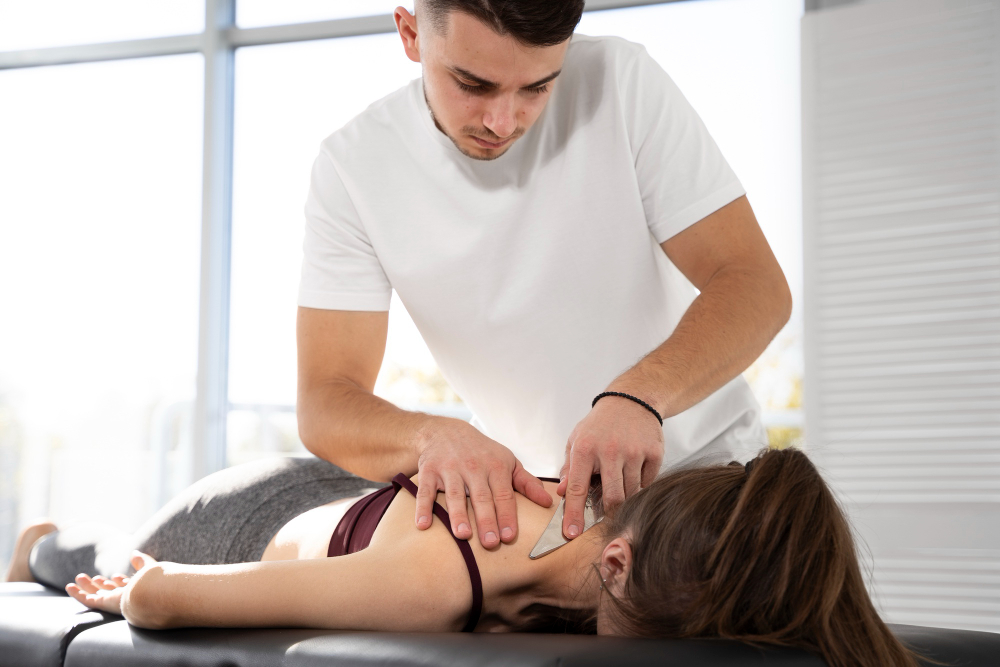
Shockwave therapy is a non-invasive treatment that delivers acoustic pressure waves into targeted areas of muscle, tendon, and connective tissue.
A practitioner uses a handheld device to apply controlled pulses to the affected area, with the treatment intensity adjusted according to the condition being treated and individual tolerance.
These waves create mechanical stimulation within the tissue that can trigger a range of biological responses associated with repair and remodelling.
This is why shockwave therapy is frequently used for persistent musculoskeletal conditions rather than straightforward acute injuries.
- Uses acoustic pressure waves
- Targets specific injured tissues
- Requires no surgery or injections
- Stimulates biological responses
Does Shockwave Therapy Reduce Inflammation?
Shockwave therapy should not be thought of simply as an anti-inflammatory treatment in the same way as medication designed to suppress inflammatory activity.
Research suggests that shockwave treatment can influence cellular signalling and biological processes involved in inflammation, pain, blood vessel formation, and tissue repair. Its effects depend on the tissue, condition, treatment parameters, and stage of healing.
In persistent injuries, the aim is often to encourage a more productive healing response rather than merely removing inflammation.
This may ultimately help the affected area become less painful and better able to tolerate normal loading.
- Influences biological signalling
- May modify inflammatory processes
- Supports tissue repair mechanisms
- Does more than suppress symptoms
Stimulating a Healing Response
Some long-standing injuries can become stuck in an ineffective cycle of incomplete repair.
The original acute inflammatory stage may have passed, yet the tissue may remain painful, sensitive, weakened, or structurally altered. Simply resting indefinitely does not always resolve these problems.
Shockwave therapy provides controlled mechanical stimulation that can encourage renewed biological activity within the affected tissue.
This can help create conditions in which repair and remodelling are able to progress.
- Stimulates cellular activity
- Encourages tissue remodelling
- Supports persistent injuries
- Promotes active recovery
Improving Local Circulation
Healthy blood flow is important throughout the healing process because recovering tissues require oxygen, nutrients, and effective cellular activity.
Some structures commonly affected by persistent sports injuries, particularly tendons, naturally receive a relatively limited blood supply compared with muscle tissue. This can contribute to slower recovery.
Shockwave therapy may encourage the development of small blood vessels and improve local circulation around the treatment area.
Better circulation can support the biological environment required for tissue repair.
- Supports local blood supply
- Encourages oxygen delivery
- Helps supply recovering tissues
- Creates better healing conditions
Supporting Tendon Recovery
Tendon problems are among the most established applications for shockwave therapy within musculoskeletal rehabilitation.
Conditions such as Achilles tendinopathy, patellar tendinopathy, plantar heel pain, tennis elbow, and certain shoulder tendon problems can persist despite rest and other conservative approaches.
Importantly, many chronic tendon conditions are no longer viewed simply as inflammatory problems. Changes to collagen structure and tissue organisation can also play significant roles.
Shockwave therapy may support the remodelling processes needed to improve the quality and function of these tissues.
- Commonly used for tendon problems
- Supports collagen remodelling
- Targets persistent tissue dysfunction
- Complements progressive rehabilitation
Encouraging Collagen Remodelling
Collagen provides much of the structural strength within tendons, ligaments, fascia, and other connective tissues.
Following injury or repeated overload, collagen fibres can become disrupted or poorly organised. The tissue may consequently become less capable of tolerating the forces generated during exercise and everyday movement.
Shockwave therapy can stimulate processes associated with collagen production and tissue remodelling.
Combined with appropriate loading exercises, this can support stronger and more functional tissue over time.
- Supports collagen production
- Encourages tissue organisation
- Improves structural recovery
- Helps restore load tolerance
Reducing Pain Around Injured Tissue
Pain and inflammation are related, but they are not the same thing.
Persistent pain can continue even when significant acute inflammation is no longer present because nerve sensitivity, tissue changes, movement patterns, and previous pain experiences can all contribute.
Shockwave therapy may influence local pain mechanisms while simultaneously addressing the health of the affected tissue.
Reduced discomfort can make it easier to participate fully in rehabilitation exercises and gradually return to normal activity.
- May reduce pain sensitivity
- Supports more comfortable movement
- Improves rehabilitation participation
- Encourages confidence in activity
Why Rest Alone May Not Solve Persistent Injuries
Rest can be extremely important immediately after certain injuries, particularly when continued activity would cause additional damage.
For persistent tendon and soft tissue problems, however, complete rest for long periods may not provide the stimulus required for tissues to regain strength and tolerate load.
Rehabilitation often requires carefully controlled movement and progressive strengthening rather than indefinite avoidance of activity.
Shockwave therapy can be used alongside this process to support the tissue while physical capacity is gradually rebuilt.
- Rest has an important early role
- Long-term inactivity can reduce capacity
- Tissues need progressive loading
- Rehabilitation supports lasting recovery
Combining Shockwave Therapy with Sports Massage
Shockwave therapy and sports massage can perform different but complementary roles within a rehabilitation programme.
Shockwave therapy can target persistent areas of tissue dysfunction, while massage may be used to address surrounding muscular tension, mobility restrictions, and compensatory patterns that have developed around the injury.
Treating the wider movement system can be particularly valuable when an injury has affected how someone walks, runs, trains, or performs everyday activities.
The exact combination should always reflect the individual’s condition and rehabilitation goals.
- Targets different aspects of recovery
- Helps manage surrounding tension
- Supports mobility and movement
- Allows individualised treatment
Exercise Remains an Essential Part of Recovery
Shockwave therapy should rarely be considered a replacement for appropriate rehabilitation exercises.
Strengthening and progressive loading teach recovering tissues to tolerate the forces they will eventually experience during work, exercise, and sport. They can also address weaknesses and movement patterns that contributed to the original problem.
Shockwave therapy can help create better conditions for this rehabilitation to take place.
The combination of treatment and active recovery is often more valuable than relying entirely on passive therapy.
- Rebuilds strength and capacity
- Improves tissue load tolerance
- Addresses contributing weaknesses
- Supports sustainable recovery
When Shockwave Therapy May Be Considered
Shockwave therapy is generally associated with persistent musculoskeletal problems rather than every new injury that produces swelling or discomfort.
It may be considered when symptoms have continued despite appropriate initial management, particularly where tendons, fascia, or other soft tissues are involved.
An assessment is important because similar symptoms can result from very different underlying problems.
Determining what is actually causing the pain should come before deciding whether shockwave therapy is suitable.
- Often used for persistent symptoms
- Commonly targets soft tissue conditions
- Requires appropriate assessment
- Treatment suitability varies
What to Expect During Treatment
A shockwave therapy session normally begins with the practitioner identifying the tissue and specific area requiring treatment.
Gel is placed on the skin before a handheld applicator delivers repeated acoustic pulses into the targeted area. Treatment can produce a rapid tapping or pulsing sensation and may feel uncomfortable over particularly sensitive tissue.
The intensity can usually be adjusted according to individual tolerance and treatment goals.
Sessions are relatively short, with a course of several treatments sometimes recommended depending on the condition and response.
- Treatment targets a specific area
- Sessions are usually relatively short
- Temporary discomfort can occur
- Treatment plans vary individually
Looking Beyond Inflammation
One of the most important developments in sports rehabilitation has been moving away from viewing every persistent injury purely as an inflammatory problem.
Pain may involve tissue degeneration, altered loading, weakness, sensitivity, mobility restrictions, or inefficient movement patterns as well as inflammatory activity. Effective rehabilitation therefore needs to consider the whole picture.
Shockwave therapy can contribute to this wider approach by influencing tissue biology while other treatments address strength, mobility, and movement.
Successful recovery is ultimately about restoring function rather than simply trying to remove inflammation.
- Persistent pain has multiple causes
- Tissue health must be considered
- Movement and strength also matter
- Recovery should focus on function
Supporting Longer-Term Recovery
The goal of treating an injury should be to restore the tissue’s ability to cope with normal demands rather than producing temporary symptom relief alone.
When shockwave therapy is appropriate, its role is to support biological repair while rehabilitation gradually rebuilds strength, mobility, and load tolerance. Training habits and recovery strategies may also need to change to prevent the original problem from returning.
This broader approach is particularly important for athletes and active individuals who want to return confidently to demanding physical activity.
Treating the underlying problem creates a stronger foundation for long-term recovery.
- Focuses on functional improvement
- Supports stronger tissue
- Encourages progressive rehabilitation
- Helps reduce recurring problems
Conclusion
So, can shockwave therapy reduce inflammation in injured tissue? The answer is more nuanced than a simple yes or no. Shockwave therapy can influence biological pathways involved in inflammatory activity and may help symptoms settle as damaged tissues recover, but its purpose is not simply to suppress inflammation. In many of the persistent conditions for which shockwave therapy is used, inflammation is only one part of a much wider healing process involving circulation, collagen organisation, tissue sensitivity, strength, and load tolerance.
The real value of shockwave therapy lies in its ability to stimulate biological activity and support tissue remodelling when recovery has become slow or persistent. When combined with sports massage, appropriate strengthening, progressive loading, and sensible activity management, it can form part of a comprehensive rehabilitation programme designed to restore healthier movement and function. For anyone experiencing persistent pain following a sports or soft tissue injury, a professional assessment can help establish whether shockwave therapy is appropriate and how it can be incorporated into the wider recovery process.

5 star reviews

Proven results

Holistic healing


REVIEWS
What clients have to say
Ian very quickly addressed issues I was having with just a conversation this is due to his extensive knowledge within the industry. This allowed him to get straight to work on each muscle group to relieve my pain and symptoms.
Everything was easy to understand, and he gave me certain activities to complete, through the day, and prior to going to bed in the evening, and the results are amazing. I am sleeping a lot better, find it easier to fall asleep, but the main thing for me was waking up less through the night.
Hypnotherapy has totally changed my outlook on life and changed me to thinking much more positive. Ian was very professional and his treatment room is a lovely relaxing space. I can’t thank Ian enough for everything.
From the beginning of the therapy my sleep improved and gradually over the sessions my symptoms reduced. By the end of my course of therapy I felt much stronger and empowered to deal with daily life.
If you struggle with food noise or feel like food thoughts dominate your day, I would definitely recommend giving hypnotherapy with Ian a try. It’s been a surprisingly empowering experience.
The way Ian explained the root cause and how hypnotherapy could help made sense and I bought into this from day one. I started to feel improvement after my first session and after 3 sessions the difference was massive.
After a few weeks I felt more positive, relaxed and was sleeping better. I still have some work to do but I feel Ian has provided me with the tools to make positive changes moving forward.
I believe hypnotherapy has helped me to reverse a lot of and allowed my thought patterns to become more positive. This has given me the belief that I will get better.
I saw Ian for four hypnotherapy sessions to help with my long-standing fear of flying, and the results were amazing. He created a calm, supportive environment and guided me through techniques that helped shift my mindset.