
Modern healthcare has advanced tremendously, offering life-saving treatments and evidence-based practices that improve both longevity and quality of life. Yet, many people are discovering that true healing involves more than just addressing the physical body. This is where complementary therapies like Reiki come in—supporting the medical system by promoting relaxation, balance, and emotional resilience.
Reiki, a Japanese energy healing practice, is not meant to replace medical care. Instead, it works alongside conventional treatments to create a more holistic approach to wellbeing. By addressing the energetic and emotional aspects of health, Reiki can ease the burden of illness, support recovery, and improve quality of life during and after medical treatment.
Understanding Reiki as a Complementary Therapy
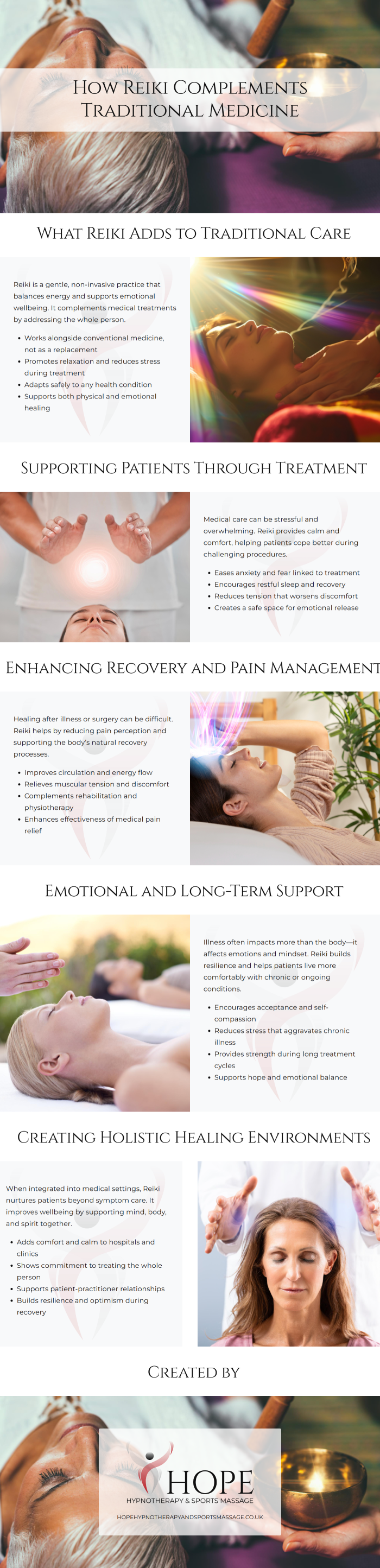
Reiki is a gentle, non-invasive practice that focuses on balancing the body’s energy. While traditional medicine targets physical symptoms, Reiki addresses the energetic and emotional layers of health. Together, they offer a more complete path to healing.
- Reiki promotes relaxation and reduces stress during medical treatment.
- It supports emotional wellbeing by creating calm and balance.
- Sessions are safe, gentle, and can be adapted to any health condition.
- Reiki works alongside—not instead of—traditional care plans.
Supporting Patients Through Stressful Treatments
Medical procedures and long-term treatments can cause stress, anxiety, and fear. Reiki offers a calming influence that helps patients cope better with the emotional challenges of medical care, making it a valuable support tool.
- Encourages deep relaxation before, during, or after procedures.
- Helps reduce treatment-related anxiety and fear.
- Supports better sleep, which is vital during recovery.
- Provides a safe, comforting space for emotional release.
Enhancing Recovery After Medical Procedures
Recovery from surgery, injury, or illness can be a long and challenging process. Reiki supports the body’s natural healing ability by creating an environment of relaxation and improved energy flow, which can aid physical recovery.
- Reduces muscular tension that may hinder the healing process.
- Promotes circulation and energy flow for overall vitality.
- Complements physiotherapy and rehabilitation efforts.
- Eases discomfort, making recovery feel more manageable.
Managing Pain Alongside Conventional Medicine
Pain is one of the most common reasons patients seek complementary therapies. Reiki does not remove pain instantly, but it helps reduce its intensity and improves the patient’s ability to cope alongside prescribed medical pain management.
- Provides relaxation that lessens pain perception.
- Helps release tension that can worsen physical discomfort.
- Offers emotional support for living with chronic pain.
- Enhances the effectiveness of medical pain-relief strategies.
Supporting Emotional Health During Illness
Medical treatment often focuses on the body, but illness also takes a heavy emotional toll. Reiki helps patients process fear, grief, or uncertainty while maintaining hope and emotional balance during difficult times.
- Creates a calming environment for emotional healing.
- Encourages the release of negative emotions safely.
- Supports a more positive outlook during treatment.
- Strengthens emotional resilience in challenging circumstances.
Working with Cancer Care
Reiki is increasingly being offered in hospitals and cancer centres as a supportive therapy. While it is not a cure for cancer, it helps patients manage side effects of treatment and cope with the emotional weight of diagnosis.
- Reduces anxiety and stress during chemotherapy or radiotherapy.
- Supports better sleep and energy during long treatment cycles.
- Eases feelings of fatigue, nausea, or discomfort.
- Provides comfort, hope, and a sense of being cared for holistically.
Helping With Chronic Conditions
Chronic illnesses often require ongoing medical care and lifestyle adjustments. Reiki complements this by supporting long-term wellbeing, helping patients live with their conditions more comfortably and with greater peace of mind.
- Encourages acceptance and self-compassion in long-term illness.
- Provides relief from stress that worsens chronic conditions.
- Supports a sense of control and empowerment in daily life.
- Helps patients maintain balance while navigating ongoing care.
Strengthening the Patient-Practitioner Relationship
When patients feel calmer and more centred, they often communicate more effectively with their medical practitioners. Reiki can help strengthen this relationship by encouraging patients to engage more actively in their own care.
- Reduces fear and anxiety before medical appointments.
- Encourages open and honest dialogue with doctors.
- Helps patients feel more empowered to ask questions.
- Supports a collaborative approach to healthcare decisions.
Creating Holistic Care Environments
Hospitals and clinics that integrate Reiki into patient care often see improvements in overall patient wellbeing. By offering complementary therapies, they provide an environment that addresses both physical health and emotional comfort.
- Enhances the atmosphere of calm and care in medical settings.
- Demonstrates commitment to treating patients as whole individuals.
- Provides supportive options beyond conventional treatments.
- Encourages integration of mind-body approaches into healthcare.
Building Resilience During Recovery
Illness and recovery can be exhausting. Reiki helps patients feel grounded, balanced, and emotionally supported, giving them greater resilience to cope with setbacks and remain hopeful throughout their healing journey.
- Strengthens the ability to manage stress during recovery.
- Encourages optimism and emotional endurance.
- Provides comfort when recovery feels slow or difficult.
- Supports long-term balance for sustained health.
Conclusion
Reiki is not a replacement for traditional medicine, but it is a powerful complement. By easing stress, supporting emotional wellbeing, and promoting relaxation, Reiki works alongside medical treatment to improve quality of life. Patients undergoing surgery, cancer care, or chronic illness management can benefit from this gentle, non-invasive therapy that nurtures the whole person.
When conventional medicine and Reiki are combined, healing becomes more than just physical recovery—it becomes a holistic process that addresses the mind, body, and spirit. This partnership empowers patients to face challenges with greater resilience, comfort, and peace, showing that true health is about more than simply treating symptoms—it is about supporting the whole person.

5 star reviews

Proven results

Holistic healing


REVIEWS
What clients have to say
Everything was easy to understand, and he gave me certain activities to complete, through the day, and prior to going to bed in the evening, and the results are amazing. I am sleeping a lot better, find it easier to fall asleep, but the main thing for me was waking up less through the night.
If you struggle with food noise or feel like food thoughts dominate your day, I would definitely recommend giving hypnotherapy with Ian a try. It’s been a surprisingly empowering experience.
From the beginning of the therapy my sleep improved and gradually over the sessions my symptoms reduced. By the end of my course of therapy I felt much stronger and empowered to deal with daily life.
Hypnotherapy has totally changed my outlook on life and changed me to thinking much more positive. Ian was very professional and his treatment room is a lovely relaxing space. I can’t thank Ian enough for everything.
Ian very quickly addressed issues I was having with just a conversation this is due to his extensive knowledge within the industry. This allowed him to get straight to work on each muscle group to relieve my pain and symptoms.
The way Ian explained the root cause and how hypnotherapy could help made sense and I bought into this from day one. I started to feel improvement after my first session and after 3 sessions the difference was massive.
I saw Ian for four hypnotherapy sessions to help with my long-standing fear of flying, and the results were amazing. He created a calm, supportive environment and guided me through techniques that helped shift my mindset.
I believe hypnotherapy has helped me to reverse a lot of and allowed my thought patterns to become more positive. This has given me the belief that I will get better.
After a few weeks I felt more positive, relaxed and was sleeping better. I still have some work to do but I feel Ian has provided me with the tools to make positive changes moving forward.